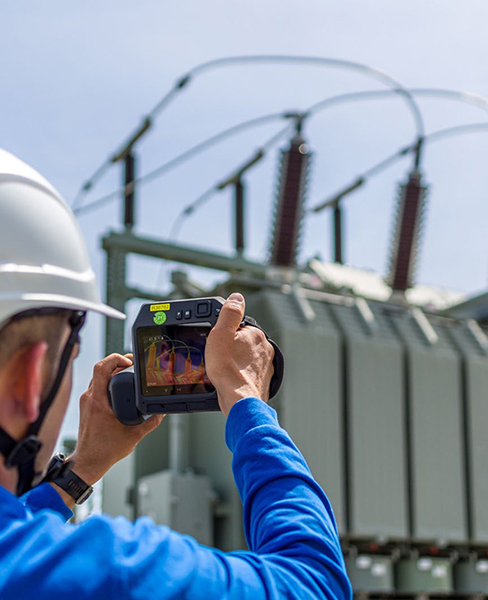
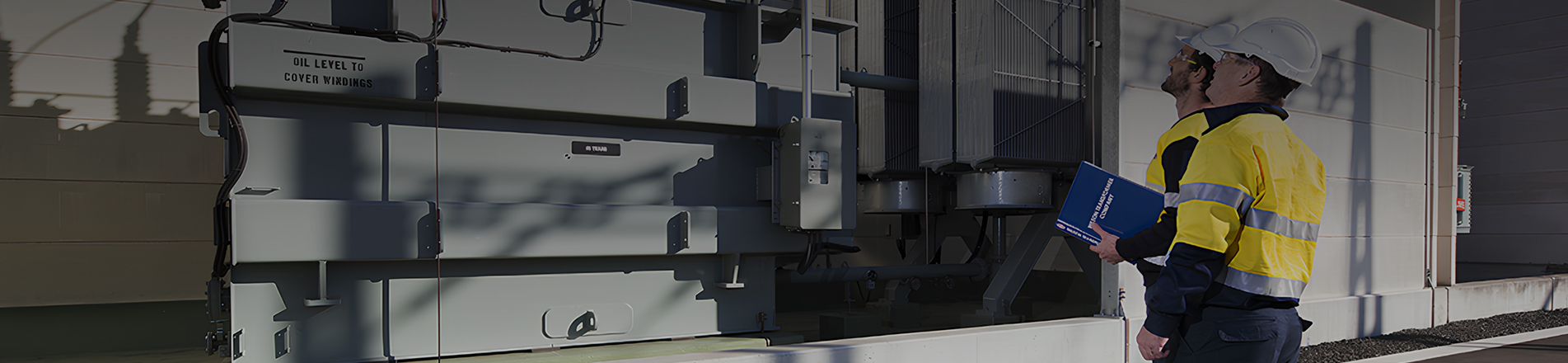
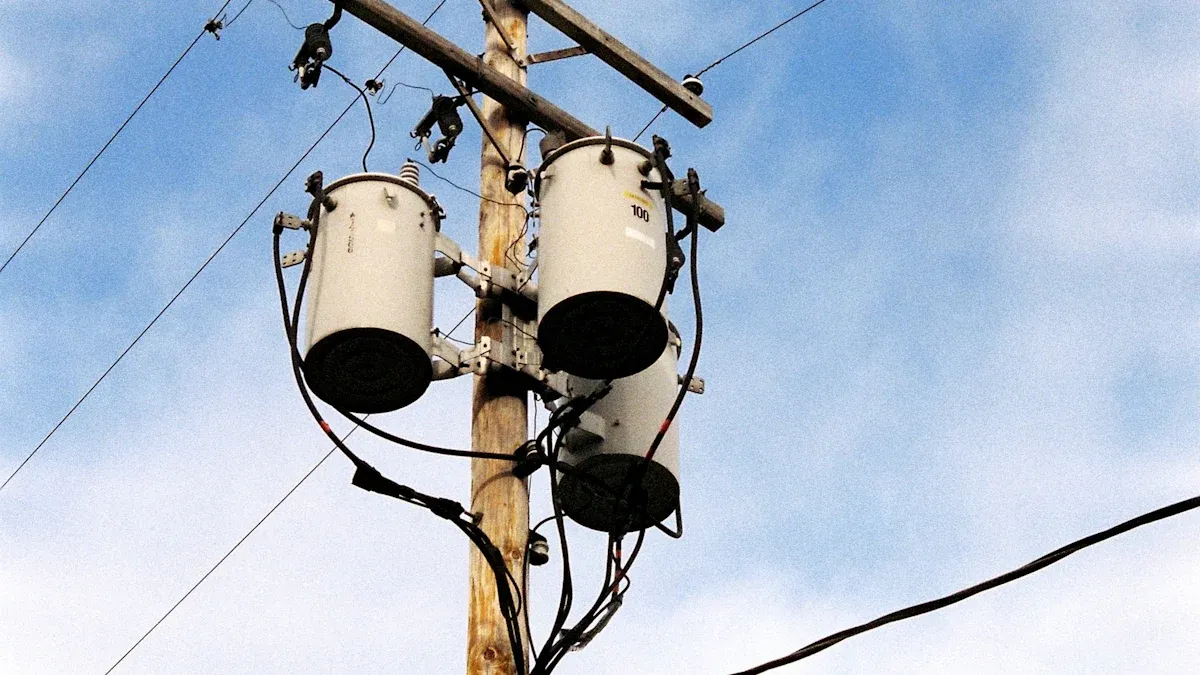
You will typically find an Oil Immersed Transformer installed outdoors in substations, power plants, and industrial facilities. This placement stems from critical cooling needs and fire safety considerations. This article examines these specific locations and the technical reasoning behind them. You will learn about cooling efficiency, safety regulations, and space constraints. We will also contrast these units with dry-type transformers. An oil immersed transformer excels in high-voltage applications where heat dissipation matters most. An oil filled transformer offers superior dielectric strength for demanding environments. Understanding these factors helps you select the right equipment for your project. Proper placement ensures operational safety and long service life.
Key Takeaways
Oil immersed transformers sit outdoors in substations, power plants, and industrial sites. This placement helps with cooling and fire safety.
These transformers use oil for cooling and insulation. The oil absorbs heat and prevents electrical failures.
Choose oil immersed transformers for high-voltage and high-capacity needs. They handle large loads efficiently and last 30-40 years.
For indoor use, you need special fire safety measures. Use fire-rated vaults or less-flammable ester oil.
Compare cooling methods like ONAN, ONAF, and OFAF. Pick one that matches your load and site conditions.
Types of Oil Immersed Transformers by Location
Substations and Power Plants
Substations serve as the critical nodes where voltage transformation occurs across the grid. You will find transmission-class oil immersed transformers handling high-voltage step-up and step-down duties, often operating at voltages up to 765 kV with capacities reaching 1000 MVA. These units rely on sophisticated cooling mechanisms to manage the intense heat generated during operation. The cooling methods include ONAN (natural convection), ONAF (forced air), and OFAF (forced oil and air), each providing distinct thermal management capabilities. For instance, a 100 MVA, 220/66 kV transformer designed for ONAN/ONAF operation carries a base rating of 60 MVA under natural convection and boosts to 100 MVA when fans activate during high-load conditions. This flexibility proves essential for grid stability.
Power plants similarly depend on these robust units to connect generation output to transmission networks. A 100 MW wind farm project, for example, utilized a 60 MVA, 220/33 kV substation transformer with OFAF cooling and a conservator-type design. This configuration linked distributed inverters to the national grid while maintaining thermal capacity under variable renewable loads. The cooling efficiency of oil convection supports long duty cycles and thermal balance, which matters greatly for continuous industrial operation.
Fire safety compliance remains a primary concern in substation design. Operators implement fire barriers, mineral oil alternatives such as ester oils, and detection systems to mitigate hazards. Consider a coastal substation exposed to high humidity and salt air: engineers selected a sealed-type transformer with natural ester oil. This choice delivered fire resistance, zero oil leakage, and stable insulation performance, operating for over five years without incident. Thermal overload protection includes RTDs, cooling fans, and overload relays, while moisture contamination control relies on breather maintenance, seal integrity, and periodic oil testing.
The capacity table below illustrates typical configurations:
Capacity (MVA)
Recommended Cooling
Configuration Type
≤2.5 MVA
ONAN
Sealed or conservator-type
2.5–25 MVA
ONAN/ONAF
Conservator-type with fans
25–100 MVA
ONAF/OFAF
Conservator-type with pumps/fans
>100 MVA
OFAF/OFWF
Conservator-type, high-end grid
Industrial and Renewable Energy Sites
Industrial facilities such as factories and processing plants require robust, high-capacity units to power heavy machinery and continuous production lines. These operations typically employ step-down transformers to reduce transmission voltages to usable levels. You will often specify an Oil Immersed Step Down Transformer for these applications, as it delivers reliable voltage transformation while handling substantial thermal loads. The different types of oil immersed transformers serve distinct roles: distribution units manage local networks, while larger transmission units handle bulk power transfer.
Renewable energy farms present unique challenges. Solar installations in tropical regions benefit from sealed oil-filled designs using ester oil, which provides fire safety and requires minimal service access. Wind farms demand transformers that can handle fluctuating output without compromising reliability. Urban substations typically recommend oil-filled transformers with ONAF or OFAF cooling for high capacity and outdoor durability. The various types of oil immersed transformers each offer specific advantages depending on your site conditions, load profile, and environmental constraints. An oil filled transformer proves particularly economical for large-scale installations where cooling efficiency and dielectric strength outweigh indoor placement concerns.
Applications of Oil Immersed Transformers in Key Sectors
Transmission and Distribution Networks
Power transmission and distribution networks rely heavily on oil immersed transformer technology for voltage transformation across the grid. You will find these units at generation stations stepping voltage up for long-distance transmission, then at substations stepping it down for local distribution. The advantages of oil immersed transformers become evident when you examine their thermal performance. Oil circulates through the core and windings, absorbing heat and transferring it to the tank surface for dissipation. This liquid cooling mechanism maintains uniform temperature distribution, preventing the hotspots that plague air-cooled alternatives.
The dielectric strength of oil also sets these units apart. Oil has a much higher dielectric strength than air, making it ideal for insulating purposes. Additionally, oil fills all internal gaps, eliminating air pockets that could cause partial discharge, and impregnates solid insulation materials, enhancing their performance. This combination of superior heat dissipation and insulation capability explains why utilities specify oil-filled units for critical grid infrastructure.
Distribution networks typically employ units ranging from 30 kVA to 2500 kVA, depending on the load profile. These transformers achieve efficiency greater than 99% at rated load for larger kVA ratings. No-load losses remain low, around 0.2–0.3% of rated power, and load losses stay minimal under heavy demand. Standard capacities include 30 kVA, 50 kVA, 63 kVA, 100 kVA, 160 kVA, 200 kVA, 250 kVA, 315 kVA, 400 kVA, 500 kVA, 630 kVA, 800 kVA, 1000 kVA, 1250 kVA, 1600 kVA, 2000 kVA, and 2500 kVA.
High-Capacity Industrial Use
Industrial facilities demand transformers that can handle continuous heavy loads without compromising reliability. You will find an Oil Immersed Step Down Transformer serving as the interface between utility transmission voltages and plant distribution systems. These units reduce 33 kV or 11 kV incoming supply to utilization voltages suitable for machinery and equipment.
The applications of oil immersed transformers in industrial settings extend beyond simple voltage conversion. Steel mills, chemical plants, and mining operations require units that withstand harsh environmental conditions while delivering consistent performance. Outdoor placement becomes essential for safety, as the oil volume presents a fire risk that indoor installations would amplify. You must also consider environmental containment measures. Bund walls contain oil spills within a confined area, while oil collection pits capture leaked oil for safe disposal. Drainage systems manage rainwater and oil runoff, and separation tanks isolate oil from water for environmental protection. Containment capacity must hold the full oil volume plus additional capacity for rainwater or firefighting runoff.
Regulatory compliance shapes installation decisions significantly. Standards such as IEC 60076 and IEEE C57 address transformer design and safety, while IEC 61936 directly governs high-voltage installations. NFPA 850 provides fire protection recommendations for power plants and substations, and NFPA 70 covers electrical installation safety. ISO 14001 requires environmental management systems that impact oil spill prevention protocols. National regulations add another layer of locally enforced environmental and fire safety codes.
Renewable energy sites present unique requirements. Solar plants require remote monitoring systems for oil leaks, while wind farms emphasize environmental protection measures for transformer oil. Hydroelectric facilities focus on water contamination prevention from oil spills. Each application demands careful consideration of site-specific conditions and regulatory obligations.
Oil Filled Transformer vs. Dry-Type: Key Differences
Cooling and Safety Trade-offs
When you compare an oil filled transformer against a dry-type unit, the cooling mechanism drives most design decisions. An oil filled transformer uses insulating fluid that circulates through the core and windings, transferring heat to the tank surface where radiators dissipate it. This liquid cooling system provides superior thermal inertia, meaning the unit can absorb short-term overloads without immediate temperature spikes. Dry-type transformers rely on air circulation, which offers far less heat capacity and limits their practical rating for high-voltage applications.
The safety profile differs substantially between these technologies. Mineral oil in an oil filled transformer presents a moderate fire risk because the fluid is combustible. Dry-type units contain no flammable liquid, making them suitable for indoor installation without vault requirements. However, you can mitigate oil-related risks by selecting less-flammable ester fluids or installing fire-rated vaults per NEC 450.23 and 450.26. The environmental trade-off also matters: oil spills require containment and cleanup, while dry-type units pose no leakage risk.
The performance metrics below summarize the key distinctions:
Metric
Oil Filled Transformer
Dry-Type Transformer
Cooling method
Insulating fluid (convection + radiators)
Air (natural or forced)
Efficiency
Higher (lower no-load and load losses)
Lower (higher losses at equivalent kVA)
Overload capability
Excellent due to fluid thermal inertia
Limited by insulation thermal limits
Fire risk
Moderate (mineral oil is combustible)
Very low (no flammable fluid)
Indoor installation
Requires fire-rated vault or less-flammable fluid
Permitted without vault
Cost per kVA
Lower for medium and high voltage
Lower for low voltage
Lifespan
30–40+ years with proper maintenance
25–30 years typical
Selecting the Right Transformer
Your selection criteria should center on voltage class, load profile, and installation environment. For high-voltage transmission and grid interconnection applications exceeding 250 MVA, an oil filled transformer remains the dominant choice. Oil-filled units power over 90% of global electrical distribution systems, a testament to their reliability and cost-effectiveness at scale. You will typically specify an Oil Immersed Step Down Transformer for industrial facilities requiring voltage reduction from 33 kV or 11 kV to utilization levels.
Cooling configuration selection depends on your load pattern. An onan transformer operates with natural convection and suits moderate, steady loads. For variable or high-demand applications, you might choose an ofaf transformer with forced air cooling, or an ofwf transformer with forced water circulation for extreme capacity requirements. Each configuration adds complexity but extends the unit's continuous rating.
Maintenance considerations also influence your decision. An oil filled transformer requires periodic oil testing for dissolved gas analysis, acidity, and moisture content. Dry-type units need only visual inspection. However, the lower initial cost per kVA and longer service life of oil-filled designs make them more economical for large-scale installations. For indoor, low-voltage applications such as data centers, dry-type units offer clear advantages. For outdoor substations and heavy industrial sites, an oil filled transformer delivers superior performance and value.
You now understand why oil immersed transformer installations dominate outdoor substations, industrial yards, and power plants. Cooling efficiency, fire safety compliance, and space constraints drive this placement strategy. An oil filled transformer delivers superior heat dissipation and dielectric strength, making it the economical choice for large-scale, high-voltage applications. For outdoor substations in non-sensitive areas, these units typically offer lower total cost of ownership due to reduced initial capital and better efficiency. Understanding these factors ensures proper transformer selection and placement for your specific operational demands. Consult with engineering experts to evaluate your site conditions, load profiles, and regulatory obligations.
FAQ
What is the typical lifespan of an Oil Immersed Transformer?
An oil immersed transformer typically operates for 30 to 40 years. Regular oil testing and maintenance extend this service life.
Can you install an oil filled transformer indoors?
Yes, but you need a fire-rated vault or less-flammable ester fluid. An oil filled transformer requires proper containment measures for indoor placement.
What cooling method suits industrial applications best?
For variable loads, ONAF cooling provides flexible thermal management. An Oil Immersed Step Down Transformer with forced air handles high-capacity industrial demands.
Which design maximizes heat dissipation in compact spaces?
Oil-immersed transformers with ONAF or OFAF cooling are recommended for urban substations with limited space, as they provide high capacity and reliable outdoor performance.