Quick Answer
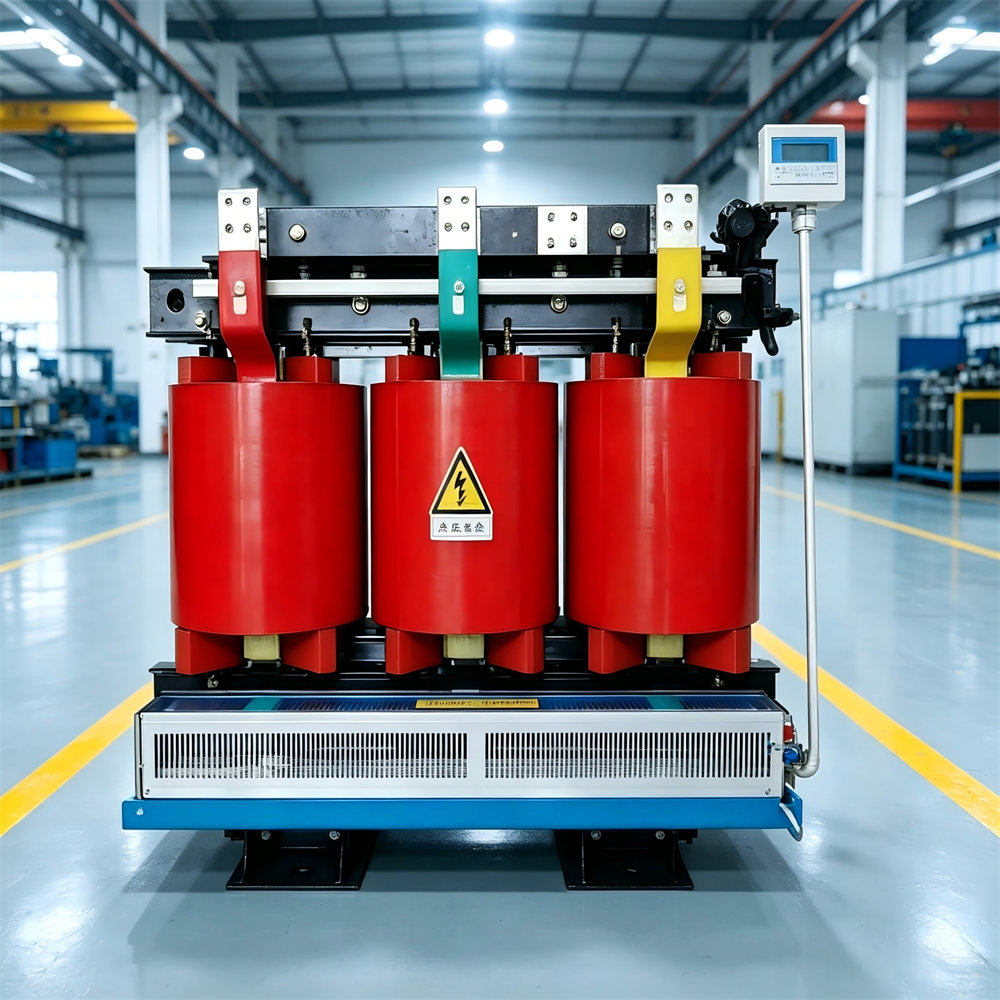
A dry-type transformer is a completely solid-state power distribution device that utilizes natural or forced air to cool its internal windings, entirely eliminating the need for combustible insulating liquids like oil. Operating on the principle of electromagnetic induction, it steps voltage up or down while providing maximum fire safety, making it the premier choice for indoor substations, commercial high-rises, and demanding industrial environments.
Key Takeaways
-
Ultimate Fire Safety: Operates entirely without oil, utilizing self-extinguishing cast resin or varnish, eliminating the risk of leaks, fires, and explosions.
-
Maintenance-Free Operation: Requires no periodic oil testing, filtration, or fluid replacement, drastically reducing long-term lifecycle costs.
-
Eco-Friendly Design: Contains no toxic chemicals or groundwater pollutants, supporting LEED and BREEAM green building certifications.
-
Versatile Installation: Can be installed directly at the load center indoors, or outdoors when equipped with specific NEMA-rated weather enclosures.
1. The Core Concept: What Exactly is a Dry-Type Transformer?
In electrical power distribution, transformers are essential for stepping high transmission voltages down to usable levels for facilities and equipment. Traditionally, these massive units were filled with mineral oil to insulate the electrical coils and dissipate heat. However, oil introduces significant fire risks and environmental hazards.
A dry-type transformer revolutionizes this process. Instead of sitting in a tank of liquid, the magnetic core and copper (or aluminum) windings are either encased in a solid epoxy resin (Cast Resin) or vacuum pressure impregnated (VPI) with specialized varnishes. Because they are "dry," these units rely on the ambient air circulating around their coils for cooling. This fundamental design shift means they can be safely installed in highly populated areas, underground transit systems, and sensitive environments like data centers or hospitals.
2. The Mechanics: How Does a Dry-Type Transformer Work?
Despite the difference in cooling mediums, dry-type transformers operate on the exact same fundamental electrical principles as their liquid-filled counterparts: Faraday’s Law of Electromagnetic Induction.
Here is the step-by-step breakdown of the operational process:
-
Primary Winding Excitation: High-voltage alternating current (AC) from the power grid enters the primary windings of the transformer.
-
Magnetic Flux Generation: As this current flows through the primary coil, it generates a continuously changing magnetic field (flux) within the highly permeable silicon steel magnetic core.
-
Electromagnetic Induction: This fluctuating magnetic field travels through the core and intersects with the secondary windings.
-
Voltage Step-Down (or Step-Up): The magnetic field induces a new AC voltage in the secondary coil. The output voltage is directly proportional to the ratio of the number of turns in the primary coil versus the secondary coil. For example, a common industrial application will step a 13.8kV input down to a 480V output.
3. Thermal Management: How Do They Stay Cool?
Because there is no oil to absorb the intense heat generated by electrical resistance, dry-type transformers rely on advanced airflow engineering.
-
AN (Air Natural) Cooling: In standard operation, the transformer uses natural convection. As the windings heat up, the surrounding air warms and rises, drawing cooler air in from the bottom of the enclosure.
-
AF (Air Forced) Cooling: During periods of peak power demand or emergency overloads, intelligent thermal monitoring systems activate integrated cooling fans. This forced airflow dramatically accelerates heat dissipation, allowing the transformer to temporarily operate at capacities up to 33% beyond its base rating.
Dry-Type vs. Oil-Immersed Transformers: A Technical Comparison
When engineers design a new substation, selecting between dry-type and oil-immersed units is a critical decision. Here is a breakdown of how they compare:
| Feature |
Dry-Type Transformers (Cast Resin) |
Oil-Immersed Transformers |
| Cooling Medium |
Ambient Air / Solid Epoxy Resin |
Mineral Oil / Natural Esters |
| Fire Safety |
F1 Class (Self-extinguishing) |
High risk (Requires firewalls) |
| Maintenance |
Minimal (Visual checks, dusting) |
High (Oil testing, leak repairs) |
| Installation Space |
Indoors (Directly at load center) |
Outdoors / Remote vaults |
| Environmental Impact |
Zero spill risk, non-toxic |
Risk of soil and groundwater pollution |
| Upfront Cost |
Slightly higher |
Lower |
| Long-Term ROI |
High (Low operational costs) |
Moderate (Ongoing maintenance) |
Real Case Application: High-Efficiency Power Distribution in Modern Infrastructure
To understand how these systems perform in the real world, consider the deployment of the SCB13 Series Eco-Efficient Cast Resin Dry-Type Transformer in a recently constructed commercial high-rise complex.
Project Parameters & Equipment Specs:
-
Capacity: 2500kVA
-
Voltage Ratio: 11kV stepping down to 0.415V
-
Standards: Fully compliant with IEC 60076 and CE standards, achieving IE4 ultra-high efficiency benchmarks.
-
Insulation: Class F/H advanced vacuum resin casting.
The Application Scenario:
The project developers required a high-capacity power solution that could be installed safely in the basement levels of the commercial complex without violating strict urban fire codes. The SCB13 dry-type transformer was selected due to its completely oil-free, flame-retardant structure.
By utilizing imported high-permeability silicon steel sheets, the unit significantly reduced standby power consumption (no-load losses). Furthermore, the advanced vacuum casting process maintained partial discharge (PD) levels at ≤10pC, ensuring long-term dielectric reliability. The unit's ultra-quiet operation (<55dB) meant it could operate continuously without disturbing the office tenants above, while its intelligent thermal monitoring system provided real-time data to the building's central control room, empowering facility managers with a truly maintenance-free, set-and-forget power solution.
Frequently Asked Questions (FAQs)
Q1: What is the average lifespan of a dry-type transformer?
A: When properly specified and installed in a well-ventilated environment, a premium cast resin dry-type transformer is designed to operate reliably for 25 to 30 years or more. Because there is no insulating fluid to degrade over time, the solid insulation maintains its dielectric strength for decades, provided the unit is kept free of extreme dust accumulation and operates within its rated temperature limits.
Q2: Can dry-type transformers be installed outdoors?
A: Yes. While they are the standard choice for indoor installations, dry-type transformers can be safely installed outdoors when equipped with the appropriate protective enclosures. By utilizing a NEMA 3R enclosure (for weather resistance against rain and ice) or a NEMA 4X enclosure (for severe corrosive environments like marine ports or chemical plants), they can deliver robust performance in harsh outdoor climates.
Q3: Are dry-type transformers more expensive to operate than oil-filled ones?
A: While the initial capital expenditure (CAPEX) for a dry-type transformer can be slightly higher than an equivalent oil-immersed unit, the operational expenditure (OPEX) is significantly lower. The total cost of ownership over a 20-year lifecycle heavily favors dry-type units because they eliminate the costs associated with periodic oil sampling, filtration, fluid replacement, and the construction of expensive fire-containment vaults.